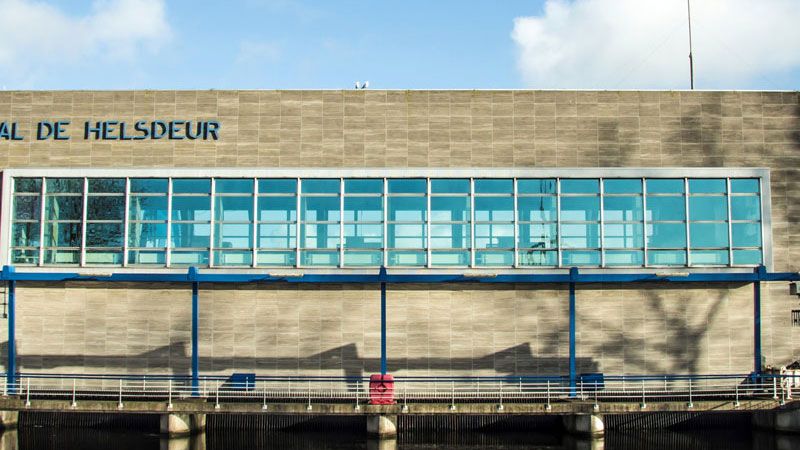
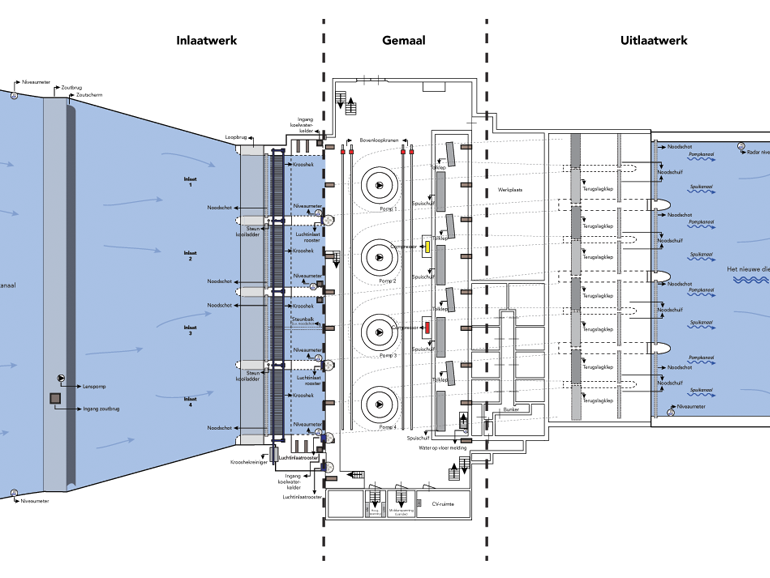
On the day Ajax defeated Real Madrid 2–1 in the semi‑final of the Europa Cup (and later became champions), an important milestone was celebrated in Den Helder. Pumping station De Helsdeur was officially commissioned on 11 April 1973. Since then, the waters of North Holland have been continuously flushed with clean water from Lake IJsselmeer, and the water levels across the province are kept stable thanks to this station. In recent years, we’ve had the privilege of working inside this remarkable pumping station. Not as technical operators or maintenance engineers, but as the drivers of the knowledge‑capture project. Together with many enthusiastic employees of the Hollands Noorderkwartier Water Authority (HHNK), we collected and documented crucial knowledge. Alongside the stories of employees nearing retirement, we explored the rich history of the pumping station through old archive books. The large amount of fragmented knowledge, in people’s heads, books, CD‑ROMs, and photos has now been consolidated and made accessible to the next generation of employees. Most importantly, the knowledge essential for operating and maintaining the pumping station has been captured.
Where is the knowledge?
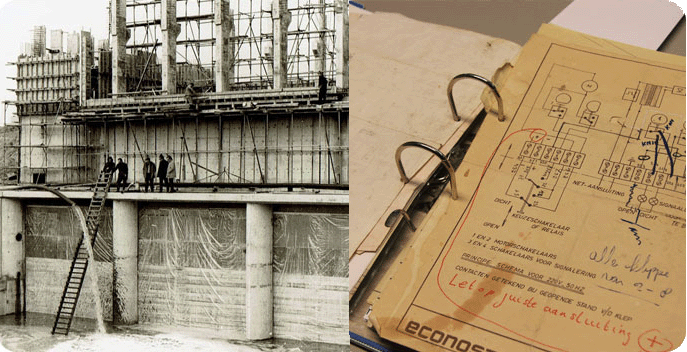
A crucial question at the start of the project was: “Where does the knowledge actually reside?”. Employees quickly concluded that most knowledge was stored in people’s heads so involving those individuals directly was the obvious first step. We also opened up archive cabinets and discovered a treasure trove of information. A great example is a man who recently walked into the pumping station out of the blue. He had been involved as a construction engineer in 1973 and brought with him a binder full of historical photos and drawings. Besides being beautiful black‑and‑white images, these photos help build historical awareness and illustrate how the pumping station was constructed. We used several of these images to create new illustrations.
Where does the knowledge go?
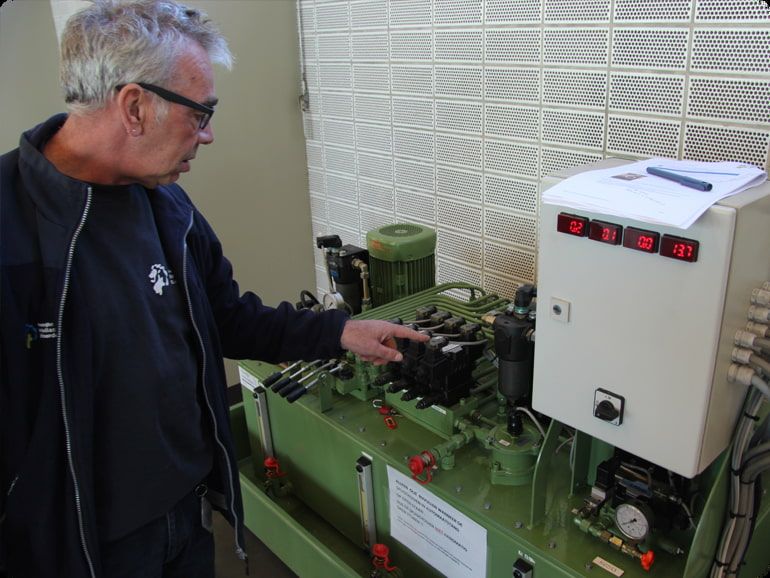
Employees who are close to retirement possess a great deal of knowledge. In practice, it is sometimes useful to document knowledge, but not always. Technical foundational knowledge is taught largely in school (often combined with practical training). And you can question how serious it is if “this is how we do it here” knowledge leaves the organization. New insights often add value. In recent years, knowledge has been renewing itself at an increasingly rapid pace. In short, when we decide to document knowledge, we must constantly ask whether it makes sense to explain everything in full detail. Together with the client and employees, we determined several content forms: overview documents of the pumping station, procedures for emergency operation and the high‑level maintenance approach. These are matters that should exist independently of individual people.
Look on knowledge
When looking at knowledge, certain pendulum movements can be observed. New perspectives on knowledge emerge over time, also within the water authority. Knowledge of the pumping station was once stored in systems (the stock approach). Later, the focus shifted to bringing people together (the flow approach). Nowadays, many organizations aim to become a “knowledge-friendly and learning organization.” This is closely related to organizational design. In practice, especially within technical organizations, we often see a combination of these approaches. One is not better than the other; it mainly indicates a prevailing mindset and focus.
Difference between theory and practice
When you decide to document knowledge, it must be reliable, at least if you want to use that knowledge for future operations (traceability, reliability, safety). There is also another type of knowledge such as “this is how we thought about it at the time”; in that case factual accuracy is less important. What matters is the person’s perspective. For this project, we required reliable knowledge. Knowledge that someone holds in their head is not necessarily correct. Personal interpretations and updated practical situations can influence accuracy. It is therefore wise to test and verify procedures.
The difference between theory and practice turned out to be greater than expected. Recently, we spoke with a manager at a utilities company about mistakes made during procedural work. Most mistakes were made by experienced employees. The greatest risk is that experienced staff sometimes rely on routine. With this insight in mind, we performed procedures (testing, emergency operations, etc.) several times with different employees.
Capturing knowledge, and then what?
Documenting the knowledge of an employee who is about to leave does not solve everything. Knowledge retention is just one of several tools to prevent knowledge loss. At the water authority, a master‑apprentice model is also used: younger or newer employees shadow the “old guard.” New knowledge and old knowledge are combined, and both sides keep each other sharp. The documented knowledge can be used to support this training approach. Increasingly, documentation and training go hand in hand.
Back to the reality, what did we do?
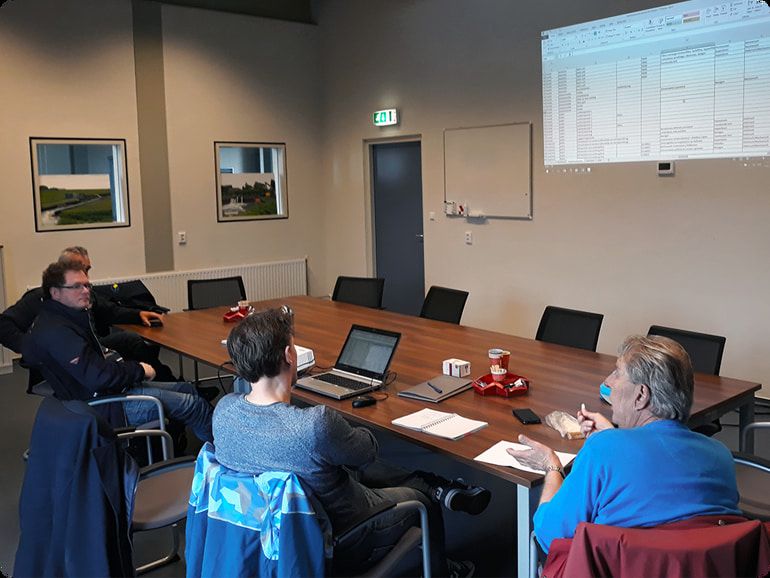
To document knowledge, knowledge must first be organized. In the project, we deliberately brought different employees together. Their involvement sparked interesting knowledge sharing. Even when describing the seemingly simple functional operation of the pumping station, several issues emerged. Its operation was not as self‑evident as assumed. Through active knowledge sharing and repeated testing, we discovered new insights.
We also created a maintenance matrix describing for each component what maintenance must be performed, when it must be performed, and to what extent. People sometimes say “the process is more important than the goal”; in this project, the process definitely contributed to the knowledge level of operational employees. The 45‑year‑old pumping station holds a wealth of knowledge. We can conclude that it is valuable to preserve part of this knowledge digitally. But a large part must also continue to be shared enthusiastically with all who are interested.
In conclusion
Throughout the project, we collaborated with enthusiastic HHNK employees. This article was made possible thanks to them. We specifically mention Evert Hoekstra, Peter Ottervanger, Rob van Rees, Bert Assies, Jan van der Lingen and Peter Schuit. They helped raise the knowledge level related to the pumping station once again. More information about HHNK: www.hhnk.nl.
Warm regards, Peter van Bart
info@eluxis.com
Linkedin: Peter van Bart